Your mattress is a decade-long reservoir for dust mites, shed skin, and allergens — and Waterdown's sealed-winter homes make it worse. Here's why mattress cleaning is the overlooked allergy fix.
What Lives in a Mattress Over Years
A mattress spends roughly a third of your life in contact with your body, and over that time it accumulates a remarkable amount of material: shed skin cells, sweat, body oils, dust mites and their waste, pollen that settles out of the air, and for many households, pet dander. None of it is visible from the surface, which is why mattress cleaning is so often overlooked — the mattress looks fine, so we assume it is. But the contamination is real, and for allergy sufferers it's a nightly trigger.
Waterdown's climate compounds the issue. Through long sealed-window winters, the same air recirculates through the bedroom, and the mattress acts as a slow filter — trapping particles that would otherwise disperse. Dust mites thrive in the warm, humid environment created by a sleeping body, and their waste proteins are among the most common indoor allergens. For someone with sensitivities, that means waking up congested, with itchy eyes or a scratchy throat, night after night.
Why Mattress Cleaning Is Different From Carpet Cleaning
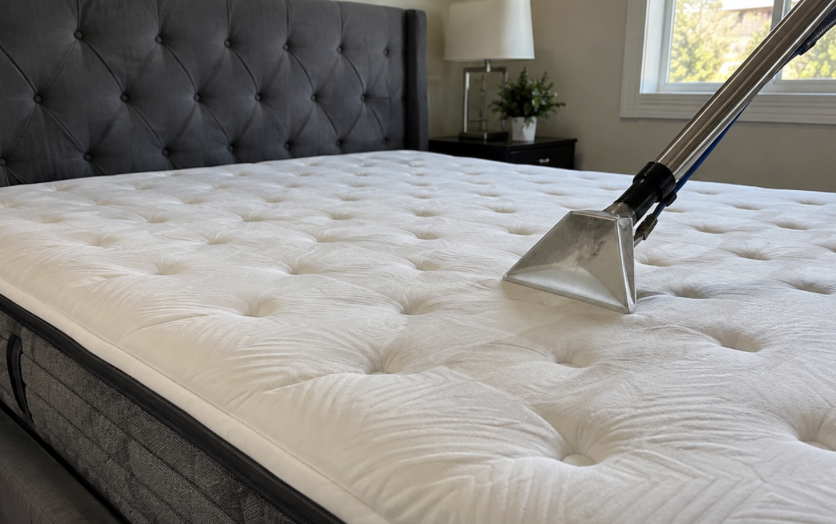
You can't clean a mattress the way you clean a carpet. Over-wetting a mattress soaks the foam and interior springs, creating the damp environment where mold and bacteria multiply — trading one allergen for a worse one. The safe approach uses HEPA-grade dry extraction to pull loose particulate out of the surface and quilt layers, followed by an ultra-low-moisture steam pass that sanitizes without saturating the interior. The mattress dries within the day, ready for a fresh night's sleep by evening.
We also treat sweat stains and body-oil rings with enzyme solutions that break down the proteins causing yellowing, and finish with an anti-allergen neutralizing spray. The process is safe for memory foam, pillow tops, and traditional spring mattresses alike — the material dictates the method, not the other way around.
Who Benefits Most From Mattress Cleaning
The clearest signal is morning symptoms that ease during the day. If you wake up congested, sneezing, or with puffy eyes and feel better after leaving the bedroom, the mattress is a likely contributor. Asthma sufferers, anyone with dust mite sensitivity, and households with pets that share the bed all benefit significantly. Parents of young children — who spend more hours in bed and have more sensitive airways — often notice the biggest difference.
Even without allergies, mattress cleaning addresses odors. A mattress that's absorbed years of sweat develops a subtle but persistent smell that no amount of bedding laundering removes, because the source is beneath the sheets. Waterdown homeowners preparing guest rooms for visits, or refreshing a child's mattress after an illness, often book cleaning for exactly this reason.
How Often and What to Expect
For most Waterdown households, annual mattress cleaning is sufficient. Allergy sufferers and homes with pets may benefit from twice-yearly service. Between professional visits, vacuuming the mattress surface with a HEPA vacuum and using allergen-proof encasements extends the benefit. The professional visit itself takes under an hour per mattress and dries same-day.
If morning allergies are a recurring problem in your home, a free estimate is the easiest way to assess whether your mattresses are contributing. We'll inspect the mattress, identify any staining or odor issues, and recommend the right approach — without pressure. For many allergy sufferers, mattress cleaning is the single change that finally makes the difference between a restless night and a genuinely restful one.