Your sofa absorbs body oils, spills, and allergens daily — but most Stoney Creek homeowners wait far too long between cleanings. Here's the honest frequency guide by household.
What Your Furniture Is Quietly Absorbing
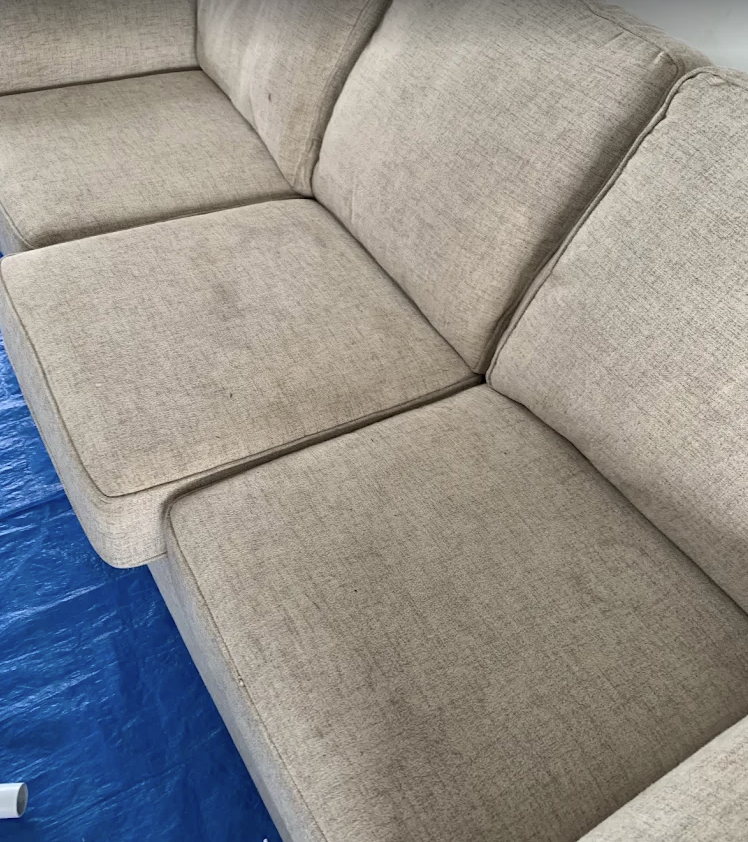
Upholstery collects more than you'd think. Every time someone sits down, body oils transfer to the fabric. Over weeks and months those oils oxidize and darken, creating the dingy look on armrests and headrests that no amount of vacuuming reverses. Add in food crumbs, drink spills, pet dander, dust mites, and the invisible layer of particulate that settles out of the air, and a sofa becomes one of the most soiled surfaces in a Stoney Creek home — even when it looks fine on the surface.
The issue is that soil hides in the weave. Microfiber, velvet, linen, and jacquard all trap particles below the visible surface, and by the time a couch looks dirty, it's been dirty for a long time. That's why waiting for visible soiling is the wrong signal — by then, the soil has already started breaking down the fabric fibers.
Recommended Cleaning Frequency by Household
For a standard Stoney Creek household with adults and no pets, professional upholstery cleaning every 18 to 24 months keeps furniture looking and smelling fresh. Add kids and the timeline shortens to 12 months — spills, sticky fingers, and heavier daily use accelerate soiling. Add pets and you're looking at every 6 to 12 months, because pet dander, oils, and accidents compound the soil load and introduce odors that embed in the foam beneath the fabric.
Homes with allergy sufferers benefit from more frequent cleaning regardless of household size. Upholstered furniture acts as a filter for airborne allergens, and a sofa that hasn't been cleaned in two years holds a surprising amount of dust and pollen that releases every time someone sits down. For those households, annual cleaning noticeably improves symptoms.
Signs Your Upholstery Is Overdue
The clearest signal is odor — if your couch has a smell that lingers even after vacuuming, the foam and fabric are holding contamination that surface cleaning can't reach. Other signs include visible darkening on armrests and headrests, a rough or stiff feel to the fabric where oils have built up, visible stains you've been ignoring, or allergy symptoms that worsen when you spend time on the furniture. If any of those apply, you're past due.
Stoney Creek homeowners sometimes try to stretch the interval with store-bought fabric sprays, but those add residue without removing the underlying soil. A proper professional cleaning uses low-moisture upholstery tools and fabric-specific solutions that lift the soil out rather than driving it deeper — and the difference is visible the moment the couch dries.
What a Professional Upholstery Cleaning Includes
Our process starts with checking the furniture's care tag to confirm the safe cleaning method, then crevice vacuuming to remove loose crumbs, hair, and debris from the seams. We apply a fabric-appropriate pre-conditioner, gently agitate it into the weave, and extract with controlled low pressure that prevents saturation of the cushions beneath. A final microfiber buff and airflow setup accelerates drying so most pieces are usable the same day.
If you're in Stoney Creek and your furniture is due — or you're not sure — a free estimate is the easiest way to get a straight answer. We'll check the fabric, identify any problem areas, and recommend the right approach. Regular cleaning genuinely extends the life of your furniture and keeps it looking newer for longer, which matters when a quality sectional is a multi-thousand-dollar purchase.